
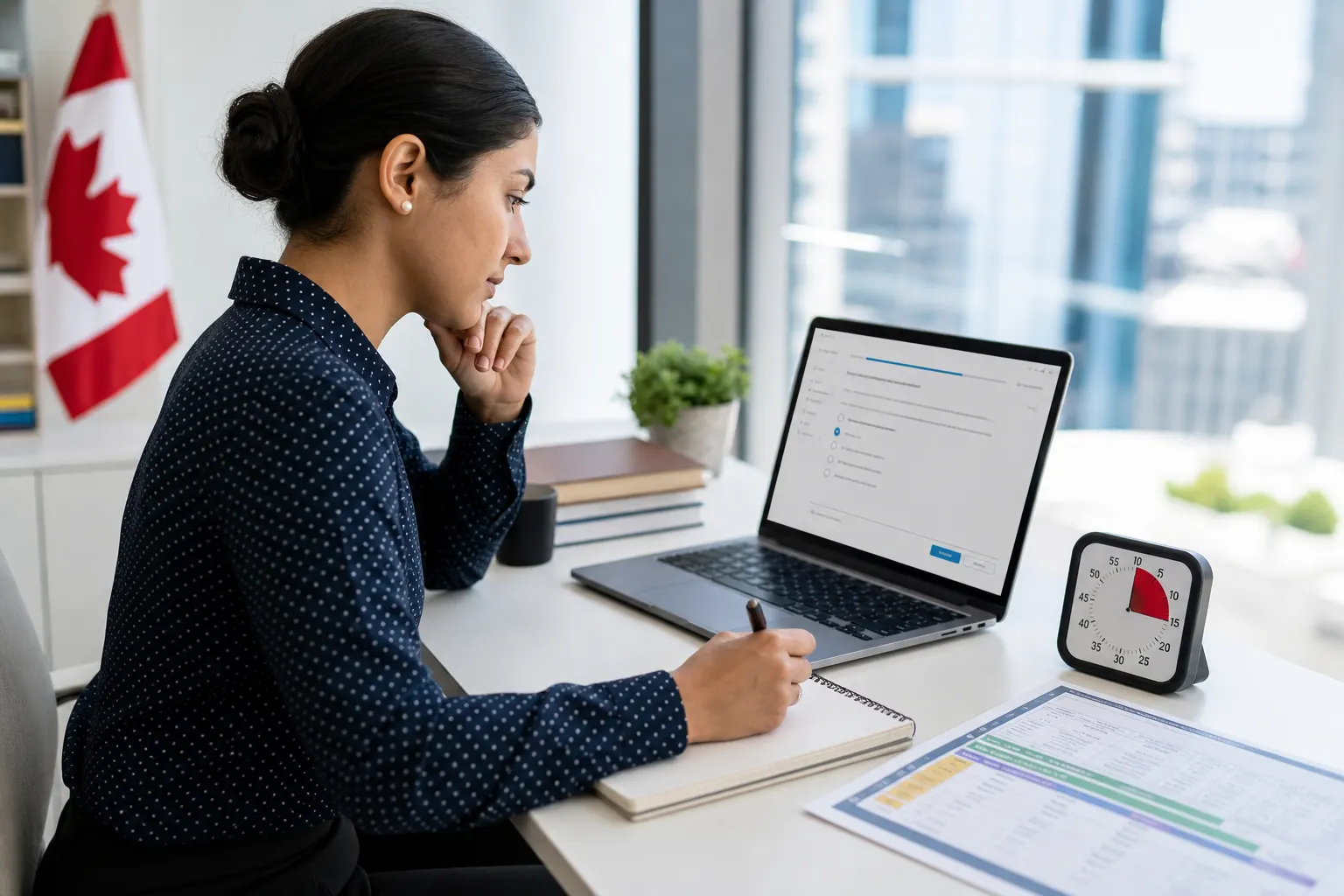
The PMP exam has 180 questions and an allotted time of 240 minutes, or four hours. Under PMI’s 2026 examination outline, 170 questions are scored and 10 are pretest questions. The exam also includes two 10-minute breaks. Possible formats include single-response and multiple-response items, drag-and-drop questions, and hands-on practicum testing involving tools, data, and case studies. Confirm current details on PMI’s official PMP certification page.
Quick summary

- Total: 180 questions.
- Scored: 170 questions.
- Pretest: 10 unscored questions, which are not identified during the exam.
- Time: 240 minutes, or four hours.
- Breaks: Two 10-minute breaks. After starting a break, you cannot return to the completed section.
- Formats: Single-response, multiple-response, drag-and-drop, and possible hands-on practicum items.
PMP exam format at a glance
| Exam element | What to know |
|---|---|
| Total questions | 180 |
| Scored questions | 170 |
| Pretest questions | 10 unscored questions |
| Allotted time | 240 minutes, or four hours |
| Breaks | Two 10-minute breaks |
| Delivery | In person at a Pearson VUE Testing Center or securely online |
The 240 minutes is the allotted exam time. Do not plan on breaks providing extra answering time.
How many questions are on the PMP exam?
There are 180 questions in total: 170 scored questions and 10 pretest questions, according to PMI’s 2026 PMP Examination Content Outline.
Pretest questions help PMI evaluate items for possible future examinations, but candidates cannot identify them during the exam. Treat every question as scored and give each one your best considered answer.
How much time do you get?

You have 240 minutes, or four hours. Dividing that time evenly produces roughly 1.33 minutes per question, but this is only a planning reference, not a PMI pacing rule. Some questions will be quick, while scenario-based or practicum-style items may require more reading and analysis.
- Read the situation and question carefully.
- Make a defensible decision when several options seem plausible.
- Leave time to review the relevant section before beginning a break.
Timed practice can reveal whether you rush, overanalyse difficult items, or lose concentration. For additional context, see this overview of the latest PMI exam patterns.
What types of questions can appear?
PMI’s 2026 outline identifies several possible formats:
- Single-response: select one answer.
- Multiple-response: select more than one response where indicated.
- Drag-and-drop: place or match information as requested.
- Possible hands-on practicum testing: work with tools, data, and case studies.
PMI does not provide a fixed number for each format in the supplied evidence. Avoid preparing for an exam made up entirely of one item type. Practise interpreting project situations, choosing an appropriate response, and explaining why alternatives are weaker.
What content areas does the exam cover?
PMI publishes three content areas: People at 33%, Process at 41%, and Business Environment at 26%. These percentages can guide study priorities, but they do not predict the precise number, order, or format of questions you will receive.
How do the two PMP exam breaks work?
The exam includes two 10-minute breaks. Before starting a break, review the responses in the section you have completed. Once you begin the break, you cannot return to questions from that section.
Practise this transition during mock exams. Finish the section, review your responses, take the break, and prepare to continue without relying on access to earlier questions. The breaks should not be treated as additional answering time.
Where can you take the PMP exam?
PMI states that candidates can take the exam in person at a Pearson VUE Testing Center or securely online. Confirm current delivery and scheduling requirements directly with PMI when you are ready to book.
What the format means for PMP exam preparation
The format offers a useful checklist for choosing PMP exam prep:
Use current, PMI-aligned material
Check that your course, book, or question bank follows the examination outline that applies to your exam. Exam information can change.
Practise varied item formats
Include single-response, multiple-response, drag-and-drop, and other formats identified in the current outline where available.
Review reasoning, not only scores
After each practice question, identify the evidence that supported your decision and why the alternatives were less suitable. This targets weaknesses more effectively than recording a percentage alone.
Build timed-exam stamina
Full or substantial mock exams help you practise concentration, pacing, section reviews, and the two break transitions.
Education Edge offers free PMP practice exam questions as part of a broader preparation plan. They should complement current PMI guidance and targeted review.
Self-study or structured PMP exam prep?
Self-study may suit you if you can interpret the outline, create a realistic schedule, track mistakes, and maintain consistent practice.
Structured instruction may help if you need a timetable, live explanations, feedback, application guidance, or accountability. It may also be useful if you are unsure whether independent practice reflects the current exam.
Education Edge is a Canadian professional education provider and PMI Authorized Training Partner at 120 Matheson Boulevard East in Mississauga, Ontario. Its PMP preparation includes instructor-led weekend cohorts over six to eight weeks, updated practice questions, mock exams, application guidance, and post-course coaching. Review the PMP certification preparation course and available course start dates.
When comparing providers, look for current outline alignment, varied practice, answer explanations, and a clear way to address weak areas. A provider’s course structure is a preparation choice, not part of PMI’s official exam format.
Frequently asked questions
Can I tell which PMP exam questions are pretest questions?
No. The 10 pretest questions are not identified during the exam. Treat all 180 questions seriously.
Do the two PMP exam breaks add time to the four-hour limit?
No. The allotted exam time is 240 minutes. Review the relevant section before starting a break because you cannot return to it afterward.
Does PMI publish the exact number of questions in each format?
Not in the supplied 2026 outline. PMI describes possible formats but does not provide a fixed breakdown for each one.
Conclusion: Prepare for the exam you will actually take
The direct answer is 180 PMP exam questions in 240 minutes, including 170 scored questions, 10 pretest questions, and two 10-minute breaks. Because the exam may use several formats, effective preparation also requires careful reading, practical judgement, varied practice, and stamina.
Use current PMI information as your source of truth, practise the break transitions, and choose self-study or structured preparation according to the support you need. Professionals in the GTA and across Canada can review Education Edge’s PMP certification preparation options and PMP practice questions, supported by Mississauga-based weekend cohorts, mock exams, application guidance, and post-course coaching.
Education Edge is a PMI Authorized Training Partner (ATP #4456). Every course is live and instructor-led, and selected courses carry a 100% pass guarantee or your money back.